GST for Textile Traders in Surat: Challan to Invoice Guide
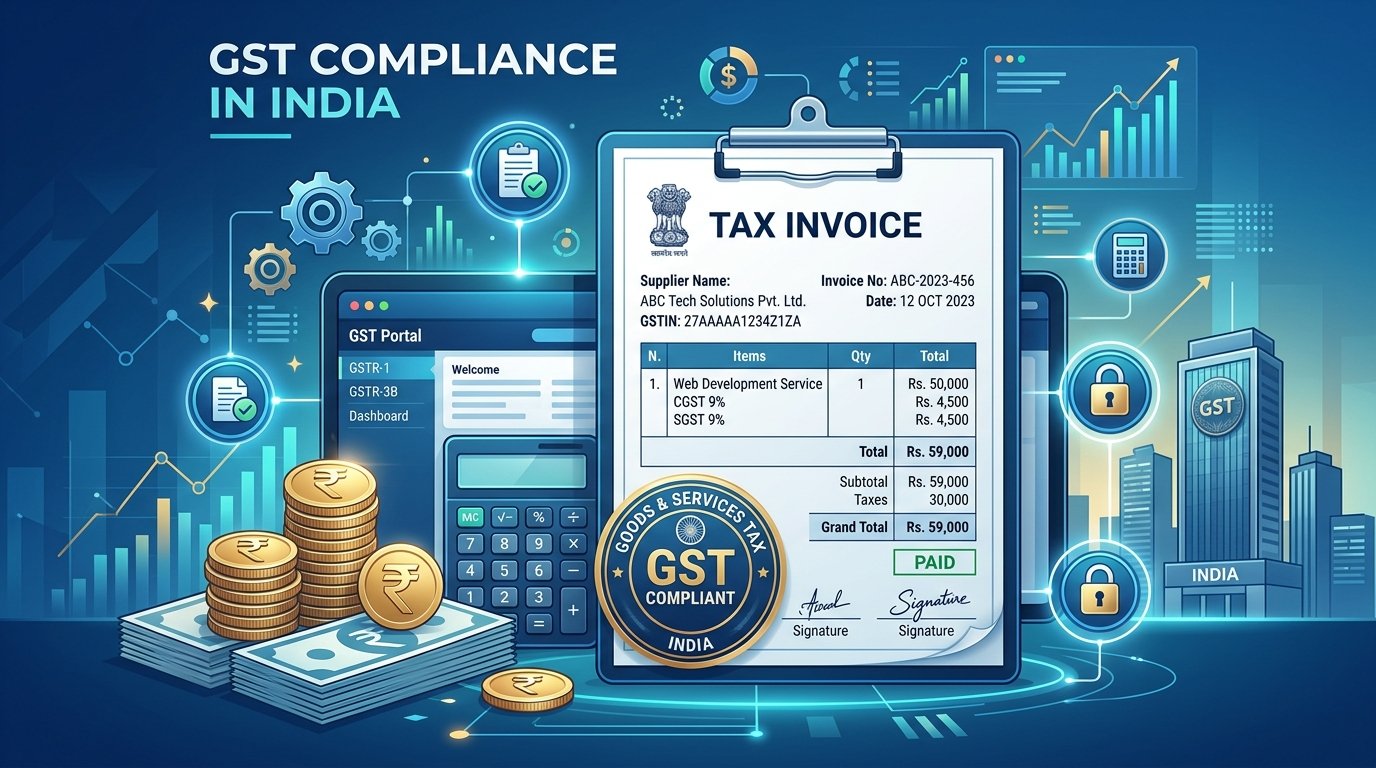
Surat is the textile and embroidery hub of India. The local trading flow relies heavily on sending goods on Delivery Challans and converting them to final Tax Invoices at the end of the billing cycle or upon approval.
Here is the step-by-step workflow to ensure complete GST compliance.
1. What is a Delivery Challan?
Under GST rules, goods can be transported for job-work or initial delivery on a challan without generating an invoice immediately.
- The challan tracks details like item descriptions, quantities, and transporter details.
- A challan is not a tax document; it only acts as proof of delivery.
2. Converting Challans to Invoices
Once the client confirms acceptance of the goods, a tax invoice must be issued within the prescribed time limit.
- You pull the items from one or multiple delivery challans.
- The software must automatically compute subtotal amounts based on rates agreed upon in the party ledger.
3. GST Calculation rules (CGST, SGST, IGST)
GST application depends on the location of your party relative to your warehouse.
- Intra-State (Within Gujarat): The transaction attracts local taxes. If the rate is 5%, it is divided into 2.5% CGST (Central) and 2.5% SGST (State).
- Inter-State (Outside Gujarat): The transaction attracts 5% IGST (Integrated) fully.
Using an integrated tool like Embros ERP, the billing engine detects the party's location from their profile, maps their HSN codes, and automatically creates the correct ledger entry without manual calculation errors.
Want to streamline your factory?
Get a free consultation and customized demo of Embros ERP built for your exact production flow.
Request Demo Now